
Introduction
Defence and security infrastructure often needs materials that handle tough outdoor conditions and stay low-maintenance over time. This is where Fiberglass Reinforced Plastic, or FRP, has found a steady place. FRP defence products are used across barracks, checkpoints, border installations, and other security-sensitive facilities where durability matters as much as functionality.
If you are a procurement officer, contractor, or facility manager exploring options for such installations, you likely want to know what these products are, where they work well, and what to check before finalising a supplier. This article covers those questions in plain terms, without exaggerating what FRP can or cannot do.
What Are FRP Defence Products?
FRP defence products refer to a category of fiberglass-reinforced plastic components designed or adapted for defence, paramilitary, and security infrastructure. FRP itself is a composite material made by embedding glass fibres within a resin matrix. The fibres provide strength, while the resin binds them together and gives the material its shape and resistance to environmental exposure.
Depending on the application, FRP defence products can include protective enclosures, cabins, panels, gratings, and structural components used in sentry posts, equipment housings, or perimeter installations. These products are often built to order, so their construction, thickness, and finish vary by project rather than following one fixed specification.
Compared to conventional materials like mild steel or wood, FRP does not rust and generally needs less frequent surface treatment. That said, it is not a universal replacement for every material in every application; the right choice depends on load requirements, exposure conditions, and the function the component needs to serve.
Which are the FRP Defence Products provided by RD India?
FRP Dome Type Shelter - ₹ 3,255/Onwards
| Product Details | Information |
|---|---|
| Usage & Application | Residential shelter |
| Shape | Dome |
| Thermal Conductivity | Low |
| Glass Type | Reinforced fiber |
| GSM | Custom available |
| Thickness | 30 mm |
| Temperature | Suitable for all climates |
| Coating Type | Protective weatherproof coat |
| Material | FRP (Fiber Reinforced Plastic) |
| Application | House shelter |
| Technique | Panel Build |
| Surface Treatment | Smooth Finish |
| Dimension (L×W×H) | < 20.5 feet × 10 feet |
| Payment Terms | Cash in Advance (CIA) |
| Supply Ability | 1000 Per Month |
| Delivery Time | 6-7 Days |
| Main Domestic Market | All India |
| Brand Name | RD India |
| Currency | INR |
| Unit Type | Square Feet |
| Price | 750.00 INR (Approx) |
| Price Type | Fixed |
| Moq | 1 |
| MOQ | 1 |
| Returnable | No |
| Product Unit | 1 Square Feet |
| Stock Quantity | 9 |
| Minimum Order Packs | 1 |
| Minimum Order Quantity | 1 |
| GSTIN | 6% |
Features:
- Weather proof
- Easy to transport and install
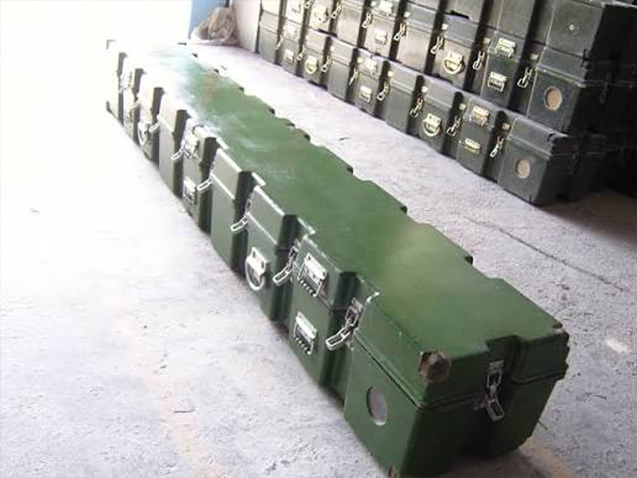
FRP Carrying Box For Explosive Materials - ₹ 2,400/Unit
| Product Details | Information |
|---|---|
| Material | FRP |
| Color | Red |
| Dimensions | 40x40x40 cm |
| Weight | 15 kg |
| Handle | Yes |
| Wheels | Yes |
| Usage | Transporting sensitive equipment or components, providing protection during transit. |
| Features | Durable, Portable, Protective, Strong, Lightweight, Reliable |
| Payment Terms | Cash Against Delivery (CAD), Cash on Delivery (COD), Cash in Advance (CID), Cheque, Cash Advance (CA) |
| Sample Available | Yes |
| Sample Policy | Contact us for information regarding our sample policy |
| Main Export Market(s) | Asia |
| Main Domestic Market | All India |
High Altitude FRP Shelter - ₹ 2,500/Onwards
| Product Specifications | Information |
|---|---|
| Material | FRP |
| Height | 8F |
| Width | 16F |
| Length | 16F |
| Application | High Altitude |
| Origin | India |
| Location | Bhosari |
| Features | Robust Construction, High Durability, Weather Resistance, Easy Installation, Low Maintenance, Long Lifespan |
How Are FRP Defence Products Used?
Manufacturing and Moulding
Most FRP components are produced using moulding processes where resin and glass fibre layers are built up to reach the required shape and thickness. This allows manufacturers to produce standard shapes as well as custom-designed components for specific site needs, such as a sentry cabin of a particular size.
Installation at Site
Once manufactured, FRP components are transported to site and installed using basic mechanical fixing methods. Because FRP is considerably lighter than steel or concrete for comparable applications, installation teams often find it easier to position and fix these components, though this can vary with the size and design of the product.
Key Benefits of FRP for Defence Applications
Not every benefit applies equally to every product, but several advantages are commonly relevant in defence and security settings:
- Corrosion resistance: FRP does not rust, which is useful for components that stay outdoors year-round, including in coastal or humid regions.
- Lightweight construction: Lower weight compared to metal alternatives can simplify transport and installation, particularly for remote or difficult-to-access sites.
- Low maintenance: FRP generally does not need repainting for rust prevention the way steel does, though routine cleaning and inspection are still advisable.
- Non-conductive properties: FRP does not conduct electricity, which can be a relevant safety factor near certain equipment or installations.
- Weather resistance: FRP can withstand sun, rain, and temperature variation reasonably well, though performance depends on the resin system and manufacturing quality used.
These benefits make FRP a reasonable option to evaluate for defence infrastructure, but buyers should assess each requirement against the specific product's design rather than assuming universal performance.
Applications of FRP Defence Products
FRP components used in defence and security contexts are commonly found in:
- Sentry posts and guard cabins at facility entrances
- Perimeter and boundary installations
- Equipment housings that need protection from weather
- Checkpoints and temporary or semi-permanent security structures
- Support infrastructure at industrial or government facilities requiring restricted access
The same manufacturing approach used for defence-related products is also used more broadly across railway infrastructure and other public-sector projects, which is one reason manufacturers serving the defence segment often also serve railway and infrastructure clients in Delhi NCR.
What to Consider Before Choosing FRP Defence Products
Before finalising an order, it helps to think through the following:
- Application requirements: Clarify exactly what the component needs to do — shelter personnel, house equipment, or form part of a barrier — since this affects design and thickness.
- Size and customisation: Defence sites often have specific space and layout constraints, so confirm whether the manufacturer can accommodate custom dimensions.
- Environmental exposure: Consider sun, rain, temperature extremes, and any chemical or industrial exposure at the site, as these affect the resin formulation and finish required.
- Installation conditions: Check access at the site, since some locations may have limited space or require components in sections that assemble on-site.
- Maintenance expectations: Ask what upkeep, if any, is recommended over the product's service life, and factor this into long-term planning.
- Manufacturer experience: Given the specialised nature of defence infrastructure, it is reasonable to ask about the manufacturer's experience with similar projects and their process for handling project-specific requirements.
Common Problems or Mistakes When Using FRP Defence Products
A few recurring issues can affect performance if not addressed early:
- Choosing standard sizing for a non-standard site, which can lead to fitting problems during installation.
- Underestimating environmental exposure, such as placing a product rated for general outdoor use in an area with unusually high heat or humidity.
- Inadequate support structure, where the base or mounting is not designed to match the component's weight and dimensions.
- Skipping routine inspection, assuming that because FRP does not rust, it needs no attention at all. Even low-maintenance materials benefit from periodic checks for cracks or surface wear.
Most of these issues can be avoided by discussing site conditions clearly with the manufacturer before production begins, rather than after installation.
Why FRP Is Considered for Defence Applications
FRP is considered for defence infrastructure mainly because of its combination of durability, light weight, and reduced maintenance needs compared to some traditional materials. This makes it a practical option for facilities where personnel may not always be available for frequent upkeep, or where components are installed in exposed outdoor locations. That said, material selection in defence projects also depends on factors like security specifications, budget, and site-specific engineering requirements, so FRP is one option among several to be evaluated on a case-by-case basis rather than treated as the default choice for every scenario.
How RD India Can Help With FRP Defence Products
RD India manufactures and supplies FRP products for industrial, infrastructure, and institutional use, including components relevant to defence and security installations. The company works on project-specific requirements, which allows for adjustments in size and design based on site conditions. Businesses and government contractors in Delhi NCR looking for an FRP railway products manufacturer in Delhi NCR for related infrastructure needs can also discuss defence-related requirements as part of the same conversation, since the manufacturing process and material expertise overlap across these categories.
Conclusion
FRP defence products offer a practical option for facilities that need durable, low-maintenance, and relatively lightweight components for outdoor and security-sensitive environments. Their suitability depends on the specific application, site conditions, and design requirements, so it is worth discussing these details with a manufacturer before finalising an order. Buyers should pay attention to sizing, environmental exposure, installation conditions, and the manufacturer's experience with similar projects. Working with an established FRP railway products dealer in Delhi NCR that also understands defence and security requirements can help ensure the final product matches the site's practical needs rather than a generic specification.
FAQs
1. Are FRP defence products suitable for all outdoor security installations?
FRP performs well in many outdoor settings due to its weather and corrosion resistance, but suitability depends on the specific site conditions, load requirements, and security specifications involved. It is best evaluated project by project.
2. How long do FRP defence components typically last?
Service life varies based on the resin system, manufacturing quality, environmental exposure, and maintenance practices, so it is not accurate to quote a single lifespan figure without knowing these details.
3. Can FRP defence products be customised for specific site dimensions?
Yes, most manufacturers can produce components to custom sizes and designs, though this should be discussed and confirmed during the ordering process based on the project's exact requirements.
4. Do FRP components need any special maintenance in defence installations?
FRP generally needs less maintenance than metal alternatives since it does not rust, but periodic inspection for surface wear or damage is still a reasonable practice.
5. What should I look for when choosing an FRP railway products dealer or manufacturer in Delhi NCR?
Look for a manufacturer with experience handling project-specific requirements, clear communication about material and design options, and the ability to accommodate custom sizing for your site conditions.